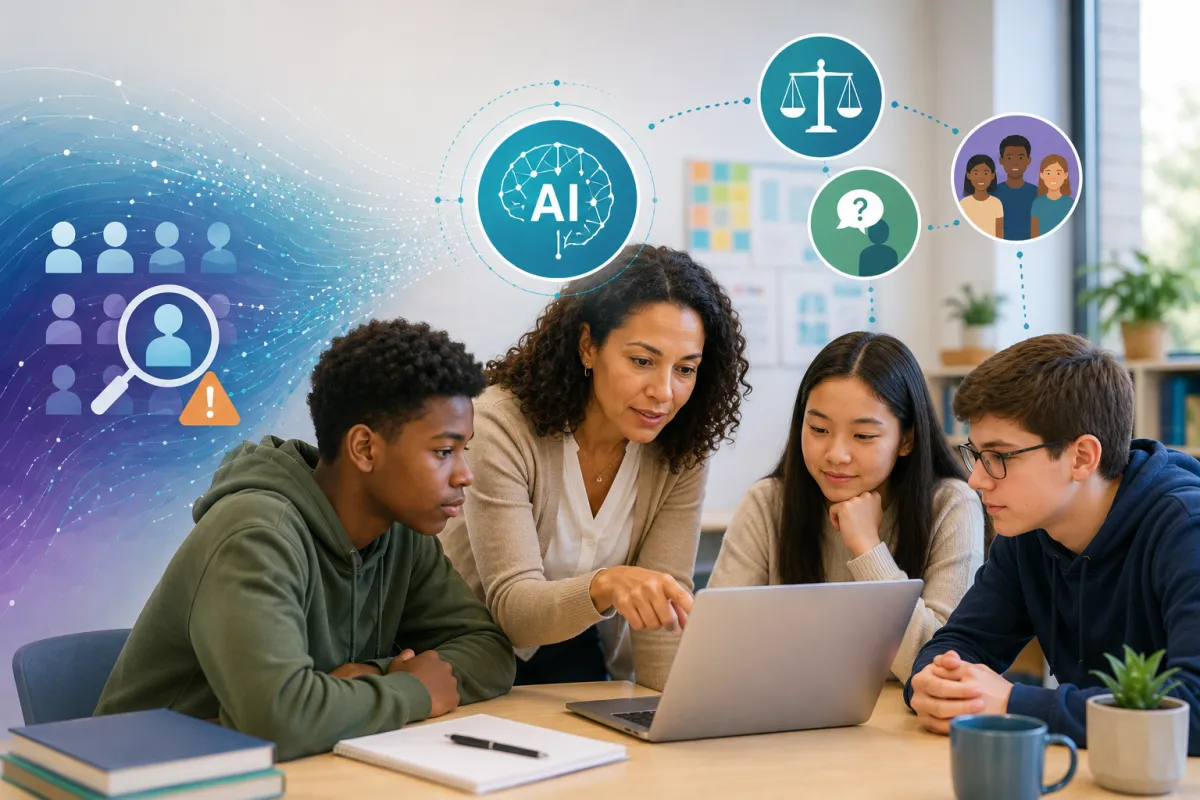
AI and Equity — Addressing Bias in the Classroom
Artificial intelligence (AI) is powerful, but it isn’t perfect. Because AI systems learn from human data, they can inherit human biases. For example, a reading tool might misinterpret dialects, or a facial recognition app may be less accurate for certain skin tones. These biases can reinforce inequities if left unchecked.
Schools must teach both teachers and students to recognize, question, and address bias when using AI.
1. Recognizing Bias in AI Outputs
Bias can appear in subtle ways, from skewed examples to missing perspectives. Educators can help students analyze AI outputs critically, asking: Whose voice is missing? Whose perspective is emphasized?
💡 Example: A high school English class compared AI-generated summaries of a novel with their own, noticing that cultural themes were underrepresented.
2. Choosing Tools Responsibly
Not all AI tools are created equal. Schools should vet software for fairness, accessibility, and inclusivity before adopting it. This includes ensuring that translation tools, speech recognition, and content recommendations serve diverse populations.
3. Teaching Digital Literacy and Citizenship
Bias awareness is part of digital literacy. Students should be encouraged to cross-check AI outputs with trusted sources, discuss fairness, and reflect on how technology shapes their understanding of the world.
4. Building Inclusive Classrooms
AI should empower all students, not just some. Teachers can integrate diverse texts, voices, and examples into lessons, using AI as a support tool rather than a gatekeeper.
Conclusion
AI bias is real, but it doesn’thave to be a barrier. With awareness, intentional choices, and open conversations, schools can turn AI into a tool for equity. By teaching students to question and reflect, we prepare them to use AI responsibly — and fairly.