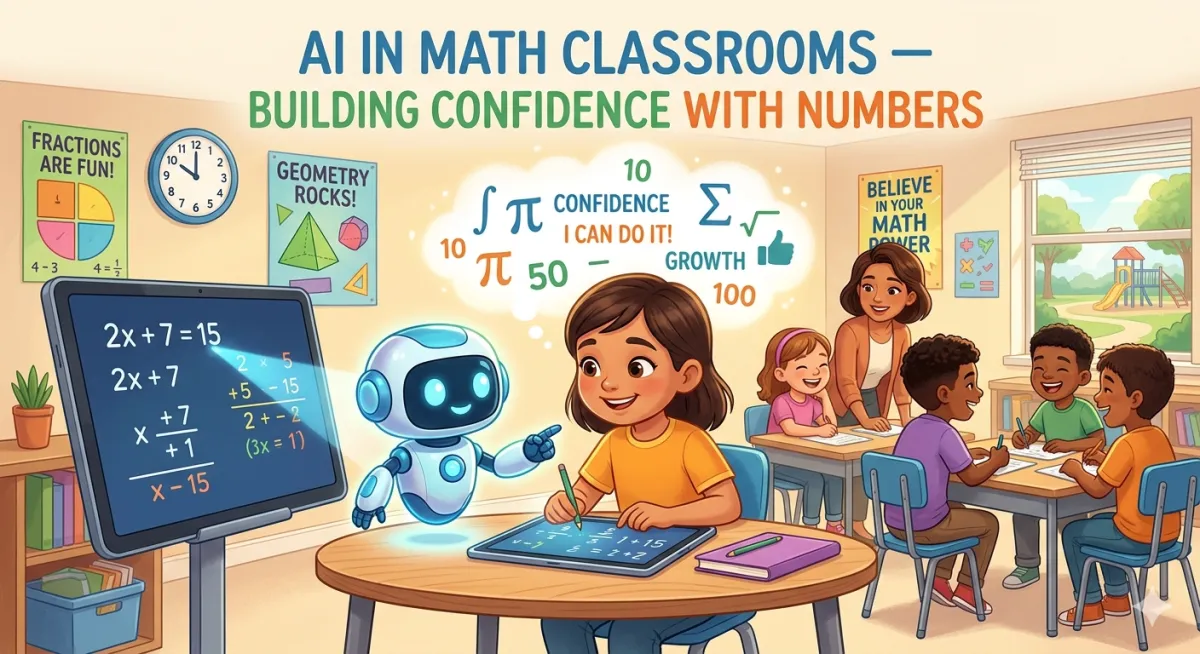
AI in Math Classrooms — Building Confidence with Numbers
Mathematics is a cornerstone of education, butit’salso a subject where many students struggle. Traditional methodsdon’talways meet every learner’s needs, leaving some behind while others grow bored. Artificial intelligence (AI) is changing this by offering personalized, engaging, and supportive math experiences.
AI tools act as tutors, coaches, and motivators — helping students not just solveequations, butunderstand them.
1. Personalized Problem Solving
AI platforms can adjust difficulty in real time, offering simpler problems for those struggling and advanced challenges for those ready to move ahead.
💡 Example: An elementary student used an AI math app that slowed down to reinforce fractions, while a peer in the same class advanced to decimals.
2. Step-by-Step Guidance
Instead of just giving the right answer, AI can walk students through each step of the process.This buildsunderstanding and reduces frustration.
💡 Case study: High school algebra students improved test scores after using AI tools that explained equations in plain language.
3. Real-Time Feedback
Studentsdon’thave to wait for graded homework. AI instantly flags errors, suggests corrections, and reinforces concepts. This keeps learners engaged and prevents small mistakes from turning into big gaps.
4. Making Math Engaging
Gamification keeps students motivated. AI-powered platforms turn practice into interactive games, giving students rewards and encouragement.
💡 Example: A middle school class competed in an AI-driven math challenge, turning review sessions into exciting group competitions.
Conclusion
AI in math classroomsisn’tabout shortcuts —it’sabout support. By personalizing learning, offering step-by-step guidance, and keeping practice fun, AI helps students build both math skills and confidence. Numbers become less intimidating and more empowering.