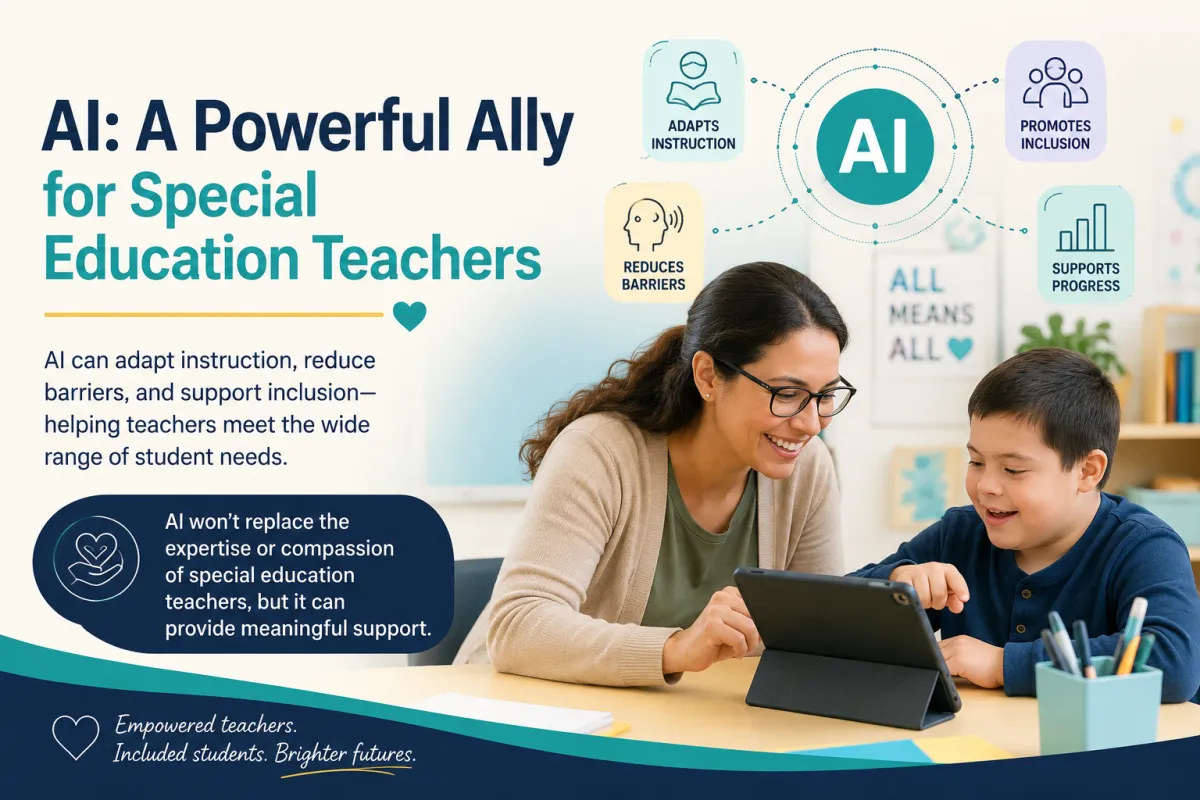
AI in Special Education — Supporting Every Learner’s Needs
Special education teachers work tirelessly to meet the wide range of student needs in their classrooms. From adapting curriculum to providing individualized attention, their workload is immense. Artificial intelligence (AI) can be a powerful ally, offering tools that adapt instruction, reduce barriers, and support inclusion.
AI won’t replace the expertise or compassion of special education teachers, but it can provide meaningful support.
1. Personalized Instruction
AI platforms can adjust assignments and resources to meet each student’s learning profile. This includes simplifying texts, providing extra practice, or extending challenges for advanced learners.
💡 Example: An AI reading program adjusted passages for students with dyslexia, giving them confidence while keeping them engaged with class content.
2. Assistive Technology
AI-powered tools such as text-to-speech, speech-to-text, and predictive typing help students with disabilities access curriculum more independently. These supports reduce barriers and build autonomy.
3. Early Intervention
AI can analyze patterns in student performance to flag potential challenges early. This allows educators to provide targeted interventions before gaps widen.
4. Reducing Teacher Workload
Writing Individualized Education Program (IEP) updates and tracking progress takes enormous time. AI can help generate drafts of reports, track student data, and suggest accommodations, freeing teachers to focus on instruction and care.
Conclusion
AI in special education should always center students’ dignity and teachers’expertise. When used responsibly, it enhances inclusion, supports diverse needs, and helps every learner succeed.