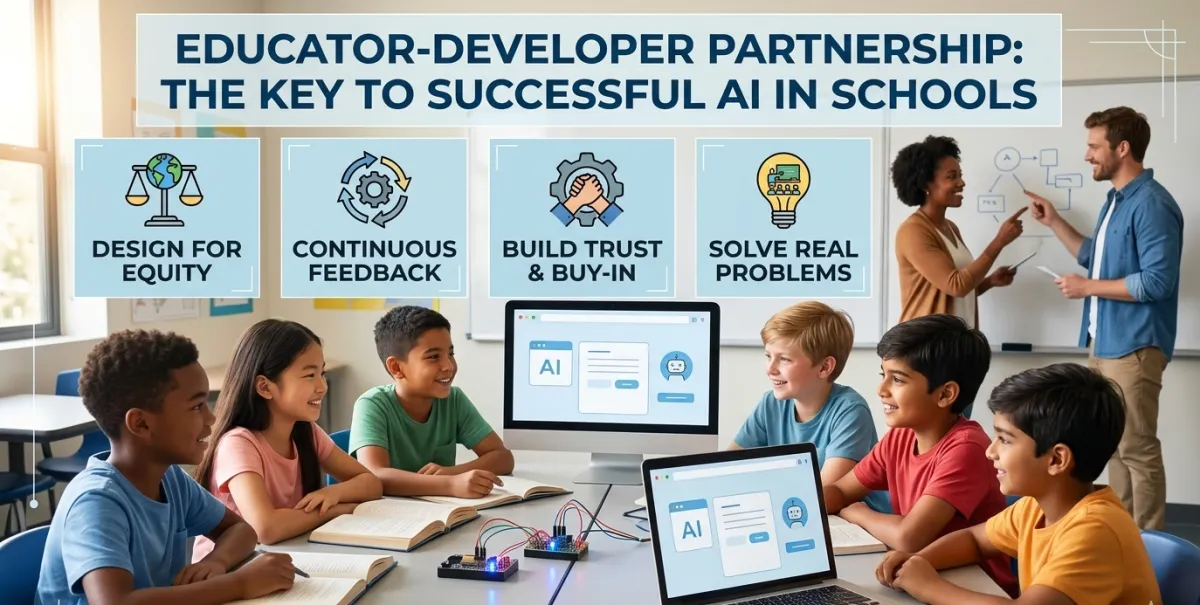
Collaboration Between Educators and Developers — Building Better AI for Schools
Artificial intelligence (AI) is rapidly entering classrooms, but not all tools are created equal. Some are designed with impressive features yet miss the realities of teaching. That’s why collaboration between educators and developers is essential.
When the people who build technology listen to the people who use it every day, schools get AI tools that truly make a difference.
1. Understanding Classroom Realities
Teachers face unique challenges: diverse learning needs, limited prep time, and tight budgets. Developers may not see these pressures unless educators are part of the design process.
💡 Example: A teacher-developer partnership redesigned an AI grading app so it worked offline for schools with weak Wi-Fi.
2. Designing for Equity
If AI tools only work in wealthy districts with one-to-one devices, equity gaps widen. By including educators from varied backgrounds, developers can create tools that serve all schools, not just the most resourced.
3. Continuous Feedback Loops
Technology evolves quickly. AI in schools needs regular feedback to stay relevant. Teachers can highlight what works, what doesn’t, and what new features would make a tool more effective.
4. Building Trust and Buy-In
When teachers see that their input shapes AI tools, they’re more likely to trust and adopt them. This collaboration builds confidence among school personnel and ensures tools are actually used in classrooms.
Conclusion
AI in education isn’t just about algorithms — it’s about people. By fostering partnerships between educators and developers, we can design tools that support equity, reduce workload, and inspire students. Collaboration is the key to making AI work for schools.