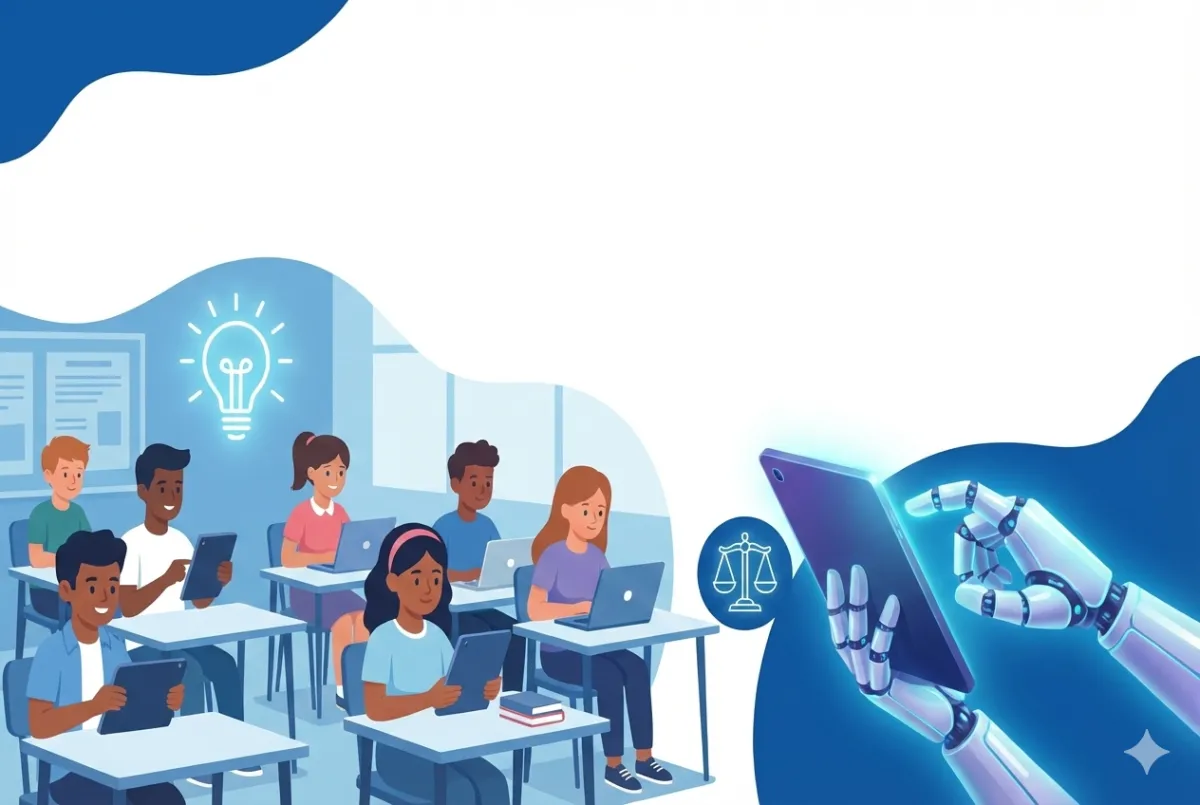
Ethics in the Classroom — Teaching Students to Use AI Responsibly
Artificial intelligence (AI) is transforming classrooms with new opportunities — but also ethical challenges. Students must learn how to use AI responsibly, balancing innovation with integrity.
1. Redefining Plagiarism
AI changes how we think about plagiarism. Instead of banning AI, schools can encourage transparency and originality.
💡 Example: Students can use AI to brainstorm ideas, but must refine them into original work.
2. Teaching Digital Citizenship
AI ethics ties into digital citizenship — bias awareness, privacy, and critical thinking all matter.
💡 Case study: One district trained students to compare AI outputs with reliable sources, improving skepticism and accuracy.
3. Daily Practice
Ethics isn’t one lecture — it should be embedded into assignments and reflections. Teachers can grade process and revisions as much as final products.
4. Modeling Matters
School personnel must model ethical AI use. Students follow their lead — whether good or bad.
Conclusion
The goal of teaching AI ethics is preparing students for careers and citizenship. Responsible AI isn’t about stopping students from using it, but guiding them to use it well.